

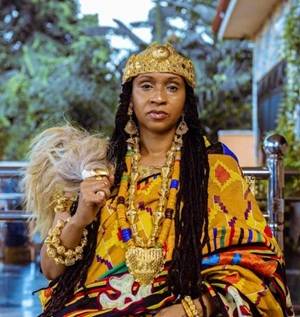
Miriam Simone
ADUKROM, EASTERN REGION, GHANA
The people of Adukrom in the Akuapem Traditional Area of Ghana have officially welcomed internationally celebrated reggae artist, entrepreneur, cultural ambassador, and humanitarian Miriam Simone Menso into traditional leadership following her installation and coronation as Amammerehemaa of Adukrom, under the stool name Nana Abena Asentewaa Sheba Makeda.
The installation ceremony was held on Friday, June 5, 2026, followed by a colorful coronation on Sunday, June 7, 2026, at the historic Anunkode Royal Palace in Adukrom.
Both ceremonies were officiated by the Chief of Adukrom, Nana Osuodumgya Otutu Ababio V, and attended by traditional leaders, queen mothers, elders, government representatives, religious leaders, members of the African diaspora, cultural advocates, business leaders, and residents from across the Akuapem Traditional Area.
The event, which commenced at 1:00 p.m. and concluded at 5:00 p.m., featured traditional drumming, cultural performances, royal processions, and customary rites that celebrated the rich heritage and traditions of the Akuapem people.
For many in attendance, the occasion represented more than a coronation—it symbolized the reconnection of a daughter of the African diaspora with her ancestral homeland.
A Journey Back to Her Roots
Born in Suriname, Miriam Simone Menso spent much of her life dreaming of Africa and seeking a deeper understanding of her ancestral heritage. Although separated from the continent by generations, she maintained a strong spiritual and cultural connection to Africa from an early age.
Speaking after her coronation, Nana Abena Asentewaa Sheba Makeda described the occasion as one of the most emotional moments of her life.
“Today is a deeply emotional and humbling moment for me. Although I was born in Suriname, my heart is filled with joy to stand on the land of my ancestors and be welcomed by the people of Adukrom. I accept this honor with gratitude and a strong sense of responsibility. I pledge to work with the chiefs, elders and people of this community to preserve our culture, empower our youth, support women and contribute to the development of Adukrom for generations to come.”
Music as the Bridge to Ghana
Miriam Simone’s connection with Ghana was largely shaped through music. Her collaboration with Ghanaian reggae artist Major Steppa on the song Loving You introduced her to Ghanaian audiences and helped establish strong ties within the country’s reggae community.
Her growing popularity was further supported by reggae promoter DJ Gashie, who compiled and released the promotional mixtape Miriam Simone – We Don’t Wanna Cry No More and organized two successful concerts during her first and second visits to Ghana.
These experiences deepened her relationship with the country and inspired her ongoing journey to reconnect with her African heritage.
Through research and ancestral tracing, she eventually discovered her roots in Adukrom—a revelation that transformed what had begun as a musical connection into a profound personal journey of identity and belonging.
Entrepreneur, Humanitarian and Cultural Advocate
Today, Miriam Simone is widely recognized not only for her music but also for her contributions to cultural preservation, entrepreneurship, humanitarianism, and community development.
She is the founder and owner of Healing & Care, a healthcare company dedicated to improving lives through compassionate care and wellness services.
She is also the founder of Dredda Records, a record label focused on music development and cultural expression.
In addition, she serves as co-founder of M&M Royalty, a clothing brand inspired by African heritage, identity, and royalty.
Together with her sister, she co-founded the Indigenous Motherhouse Foundation (IMF Foundation), an organization committed to supporting women, mothers, children, and vulnerable communities through empowerment, education, and development initiatives.
Miriam Simone is also a proud member of the Golden Fingers Sound System, through which she continues to spread messages of unity, social awareness, and African consciousness to audiences around Africa and the world.
A New Chapter for Adukrom
As Amammerehemaa of Adukrom, Nana Abena Asentewaa Sheba Makeda is expected to champion:
- Cultural preservation
- Youth empowerment
- Women’s development
- Community welfare
- Stronger relationships between Ghana and members of the African diaspora
Addressing the gathering during the coronation ceremony, Nana Osuodumgya Otutu Ababio V described the occasion as a historic milestone for the traditional area.
“Today marks a historic chapter in the history of Adukrom. We have welcomed a daughter of our ancestral land who, despite being born abroad, has embraced her heritage and returned to contribute to the progress of her people. We charge her to lead with humility, integrity and dedication, and to use her position to promote development, preserve our culture and strengthen the bonds between Ghana and the African diaspora.”
The newly crowned Queen Mother has expressed her commitment to serving as a bridge between Africa and its descendants across the globe while promoting initiatives focused on culture, education, youth empowerment, women’s development, and community growth.
Her media relations and public communications are managed by Humble Heights Connect, which serves as her official public relations representative.
For many observers, Miriam Simone Menso’s installation and coronation represent more than a traditional ceremony. They embody a powerful story of heritage, destiny, and reconnection—a journey that began with a childhood dream in Suriname, was strengthened through reggae music, and ultimately led her back to the land of her ancestors.
Event Highlights
Installation Date: June 5, 2026
Coronation Date: June 7, 2026
Venue: Anunkode Royal Palace, Adukrom
Officiating Traditional Leader: Nana Osuodumgya Otutu Ababio V
Stool Name: Nana Abena Asentewaa Sheba Makeda
Traditional Title: Amammerehemaa of Adukrom
Profession: International Reggae Artist, Entrepreneur, and Philanthropist
Focus Areas
- Culture and Tradition
- Youth Empowerment
- Women’s Development
- Community Welfare
- Diaspora Relations

Leave a Comment